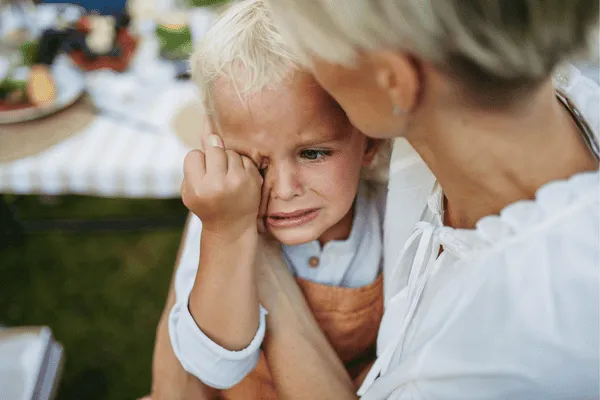
3 Reasons Your Child May Be in Survival Mode
Many parents describe daily life as a mix of overwhelm, big emotions, and constant reactivity. If this feels familiar, you’re not alone—and you’re not doing anything wrong. These patterns often trace back to something deeper in the nervous system: being stuck in 'survival' mode from the birth experience, or unintegrated primitive reflexes.
Before we begin, breathe. You’re here because you care, and that already shifts your child’s nervous system toward safety. And you are absolutely not alone in this.
Below is a parent-friendly guide to understanding the early building blocks of emotional regulation, connection, and development. I would also like to make a note on 'regulation', if you haven't read my other work - what I mean here is awareness and the ability to process the emotion.
Often 'regulation' is misunderstood as a way to create calm now, but that represses the experiences, which then lives on in the body - I see this often in my Somatic Clinical Counselling and Craniosacral work - we've all done it because we live in a society that asks us to contain ourselves. But then we don't often get or create space to process after. The issue with this is too many stored emotions bottlenecks the nervous and fascial systems, resulting in chronic pain and illness.
What You’ll Learn About Survival Mode, Primitive Reflexes & Basic Needs
Understand survival mode psychology - and how to know if you're stuck in it
How survival mode can get stuck in the child's system at birth
4 foundational needs that affect optimal development
How unintegrated primitive reflexes may be affecting your child's nervous system
Scroll down if you prefer to explore with me on YouTube!
Survival Mode Psychology: A Simple Way to Understand Your Child’s Reactions
“Survival mode” describes a state where the nervous system is doing its best to protect. In survival mode, the brain prioritizes safety over cooperation, logic, or emotional 'regulation'. Here we're in our 'reptilian' brain - a sympathetic or chronically activated state - fight, flight, freeze, and even fawn.
You might see:
Fight - Arguing, screaming, hitting
Flight - Avoidance or shutdown, which looks like defiance
Meltdowns over seemingly small things
Heightened irritability and sensitivity
Emotional reactions that feel “out of nowhere”
These are all signs of an overwhelmed system. This is not manipulation. It's your child screaming for help in the only way they know how to in that moment. How you respond is what makes the difference.
And as a parent, you may also be in this state... but just have a little more control over how it shows up, and hopefully how you get help.
Why “Challenging Behaviors” Are Signs of Stress, Not Disobedience
In survival mode psychology, the brain is not thinking—it’s protecting.
This means:
Emotional regulation becomes harder
Logical reasoning becomes inaccessible
Cooperation takes a back seat
Body-first reactions dominate
If your child is melting down, refusing tasks, avoiding transitions, or reacting with intensity, it’s not “attitude.” It’s a nervous system doing its best with what it has.
When you understand this is just a cry for help, it becomes easier to respond with a little more compassion. And when you do this consistently, your child will learn that you are a safe harbour, regardless of their experience. It doesn't mean that all behaviour is acceptable, but it's our job to show them and model a healthier approach to use next time. Connection first is the key.
And when you offer this safe space consistently, combined with awareness of their triggers, you will notice your child also softens. They are able to spend more time in a parasympathetic - rest, digest, connected state. You will notice their nervous system become more flexible - when they are triggered, they are able to ask for help and return to baseline with greater ease. This is health in the nervous system - this is what Heart Rate Variability (HRV) measures.
When we lower the alarm in the body, behaviour shifts naturally because we created safety for them —without power struggles.

How Can a Child Get Stuck in Survival Mode?
This is the part that I find very interesting, because most of our subconscious patterns are learned and hardwired before we are 2 years old - before we are verbal. This can mean it's really hard to recall and make sense of them, which is why I practice Somatic work.
Birth is beautiful, but by nature it's a huge change which can leave the system in shock if the infant is not placed with their mother almost right away. They need the touch, safety, and nourishment.
And then of course we have all the complications that occur. With many of these complications, particularly in our Western world where mothers are then left to themselves to care for themselves, babe, maybe other children, and the household... they have little support and time to process anything. This also goes for Father's who have often witnessed what can be a traumatizing experience, in the sense that their loved ones may be in distress and they can't do much.
They feel stuck. It all gets stuck.
So you have an infant that may feel the shock and not have had the repair. Then a mother in a similar situation, plus the father. Is it any wonder we see high rates of postpartum anxiety and depression?
So how can the infant's system 'come down' when their parents system's are overloaded?
This is where Somatic work like Craniosacral is really powerful for infants, new (again) mothers, and fathers. A skilled practitioner can help offer release and create some sense of safety in the system internal systems, and then ideally support the family in creating support in their environment.
A Clear Framework for Supporting Your Child’s Growth: 4 Basic Needs
While we often think of needs as food or sleep, the 5 basic needs of a developing nervous system reach further:
1. Physical Safety: Predictability and safety in the environment leads to a less activated system, and less fight, flight, and shutdown responses.
2. Emotional Safety: Children thrive when adults respond with connection and attunement, not intensity. This is hard for parents in our overwhelming world today, where many didn't grown up with these tools and their subconscious is running the show.
3. Sensory Nourishment: Movement, rhythm, deep pressure, and grounding help integrate reflexes. Nature offers opportunities for all of these, as do you for your child. You don't need anything fancy.
4. Competence & Autonomy: Feeling capable and offering choice reduces the need for hyper-vigilance. This is where predictability, routine, and an age-appropriate amount of choice is important. This is why my work is trauma-informed.
When these needs are unmet, the nervous system shifts back into survival mode—even in a loving home. When these needs are consistently met, children move naturally from overwhelm to confidence, and they learn the tools they need to grow into healthy adults.
This is why understanding why basic needs matter becomes foundational for every parent.
Primitive Reflex Moro-Palmar: The Startle Pathway That Shapes Sensitivity
The Moro reflex is an infant’s automatic startle response - they reach all limbs out to catch themselves should they be falling. The Palmar reflex is the instinctive grasping reflex. They’re early survival tools, but when they stay active beyond infancy, they can ripple into childhood behaviour and signal a lack of safety in the body.
This is why this work is part of my Somatic work, particularly with Neurodiverse and sensitive souls - adults and children. This is part of the sensori-motor link that connects to our subconscious patterns.
Signs of an active Moro–Palmar link may include:
High sensitivity to noise or touch
Difficulty with transitions
Emotional reactivity
Trouble with fine-motor tasks
Anxiety or hypervigilance
If your child seems “on edge,” it may not be personality—it may be neurology. Knowing this creates compassion. Integration becomes possible.

A Parent-Friendly Way to Spot Moro-Palmar Patterns
When the Moro–Palmar reflex stays active, the body remains on high alert. Small triggers feel big. Sensory input becomes overwhelming. Emotions surge quickly.
Typical signs of an active (unintegrated) Moro reflex:
Frequent startle response
Emotional outbursts
Sensitivity to change
Difficulty sleeping or calming
Signs of an active (unintegrated) Palmar reflex:
Tight grip or fatigue with writing
Difficulty with utensils or buttons
Hand strength challenges
When both appear together, the Moro–Palmar link may be influencing your child’s daily ability to function from a parasympathetic or calm, connected state. They may appear to hold it together, but can easily be tipped off.
The cycle is real. But it’s also reversible, if basic needs are first met.
Gentle movement, co-regulation, predictable routines, and deeper understanding give your child a pathway back to safety and connection.
Helping Your Child Shift Out of Survival Mode
These simple but powerful practices help signal safety to the nervous system:
Slow the pace: Hurrying activates the Moro reflex, as does multi-tasking.
Starfish exercise: Reaching the limbs out with an inhale, then hugging them in with an exhale helps integrate the Moro reflex.
Offer deep pressure: Firm hugs, pushing/pulling, or compression help calm the Palmar pathway.
Simplify environments: Reduce sensory load during transitions.
Narrate safety: “You’re safe. I’m here. We can do this slowly together.”
Create predictable rhythms: Routines offer predictability, as do rhythms, which allow for more flexibility.
Lead with connection: Safety before strategy. Presence before correction.
These small, consistent shifts build a foundation of security your child can return to again and again.
When a child’s internal world doesn’t feel safe—whether because of sensory overload, unpredictability, or unmet needs—the body shifts into defense mode. As parents, our goal becomes supporting safety, not controlling behaviour.
And that’s a powerful shift.
With understanding, safety, and connection, the nervous system can soften.
And when the body feels safe, the heart opens—and the child returns to themselves.
You’re doing beautifully. Keep going.
Want to Learn More?
Go here to explore Heart Centred Parenting
Sign up to get science, promos & tools in your inbox!
If you have any questions, please feel free to reach out!
🌺 Katie
Please note that this information is intended for educational purposes only and should not be considered medical advice. Always consult with a healthcare professional for personalized guidance.