Why Can't I Relax? How to recover from chronic stress
You've done the bath. The candle. The "day off." You've sat down to finally rest, and your body won't let you.
Your mind keeps working even when there's nothing left to solve. You feel unsettled in moments that are, by every outward measure, safe. And maybe the most confusing part: you can't always point to why you can't relax — you just know that you can't, and you're tired of being told to "just breathe", as if it's that simple.
"Why can't I relax" and "why do I feel anxious all the time" are the same question, so let’s get to the root of it.
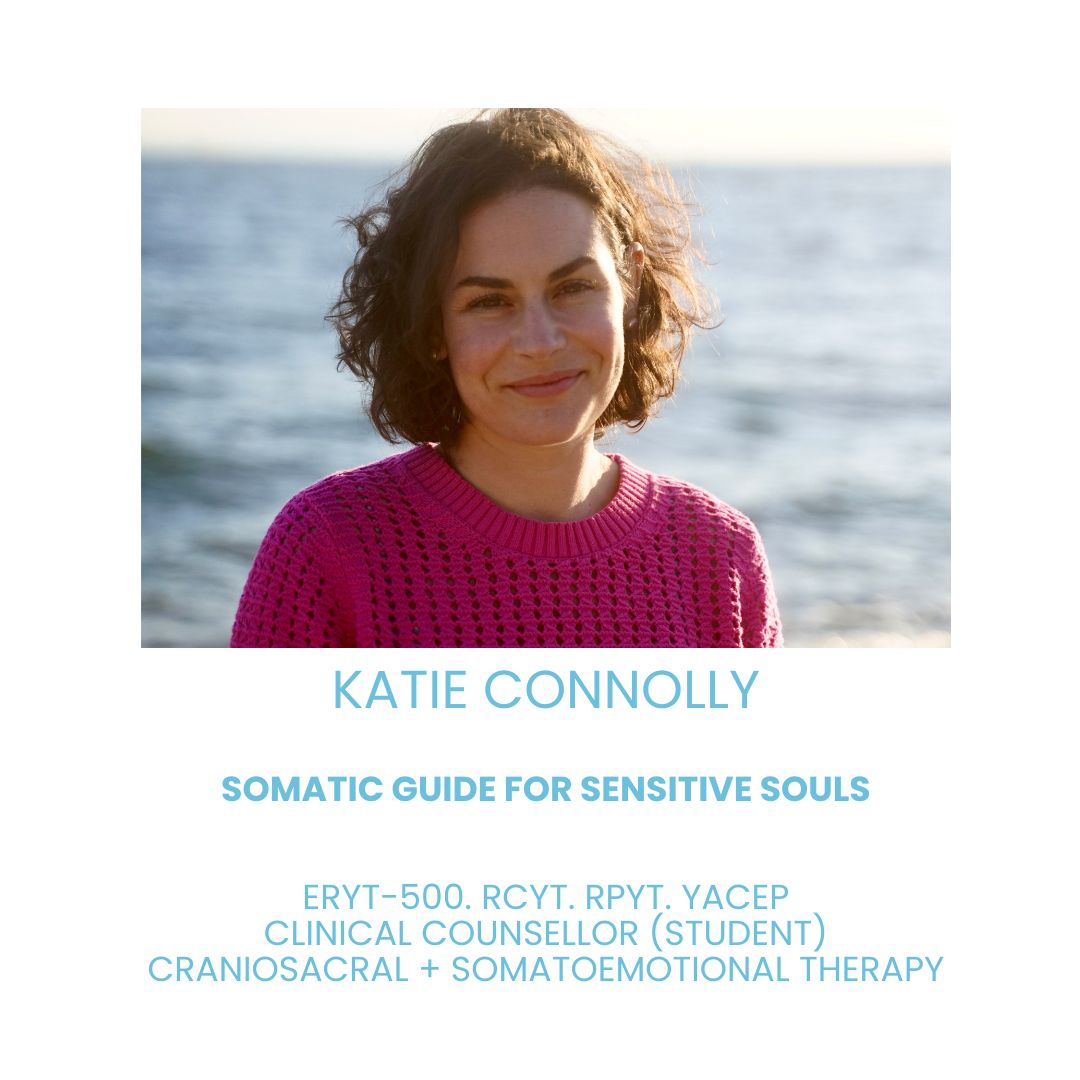
As a Neuroaffirming Somatic Clinical Counsellor who's spent years working with women (and men) carrying this pattern, and lots of experience myself with people pleasing, I want to offer a different starting point.
What You'll Learn About Chronic Stress, Symptoms & How to Recover:
Why chronic stress symptoms often hide in plain sight
What it takes to recover from chronic stress, for real, not just temporarily
The connection between transitions, overwhelm & neurodivergence
The real reason people pleasing feels safer than saying what you actually need
What subconscious reprogramming actually requires (and why willpower alone doesn’t work)
Scroll down if you prefer to explore this with me on YouTube!
Hidden Chronic Stress Symptoms
It's not that you haven't found the right technique yet, it can be one of two things, or a combination of them:
1) Your environment is physical, emotionally, or energetically unsafe - reach out to speak with someone asap.
2) Your nervous system may have never fully learned what safety feels like in the first place.
Most people who are living inside chronic overwhelm don't recognize it. It doesn't even register because it's how things have always felt. And often a way of being that was learned so early, sometimes even preverbally, that it was never coded as "too much." It was coded as normal.
Instead we tend to ask: Why do I feel anxious all the time? Why can't I relax even on vacation, even on my day off, even when nothing is currently wrong?
These are the visible aspects of chronic stress symptoms that have been running in the background for years, as normal.
7 Ways We Try to Stay Safe - From people pleasing to distraction:
Most women I work with recognize themselves in at least two of these patterns… and some of these coping mechanisms even look like being responsible rather than chronic stress patterns!:
Keeping things the same — rigid routines, familiar environments, resisting change or uncertainty.
Being hyper-compentent — planning every outcome, not asking for help, and managing other people.
Consuming more information — constantly checking the news, social media, Google, notifications, or researching until you feel certain.
Staying constantly distracted — scrolling, watching, listening, working, cleaning, shopping, or always having something filling the silence.
Avoiding discomfort — difficult conversations, unfamiliar situations, uncertainty, or anything that makes you feel uneasy.
Keeping everyone else okay — monitoring your child or environment, anticipating needs, reading the room, people pleasing, managing other people's emotions.
Looking outside yourself for reassurance — relying on experts, other people's opinions, rules, algorithms, or external validation to tell you whether you're okay.
Overriding what you feel — telling yourself you're fine, pushing through, minimizing discomfort, or disconnecting from your body's signals because they're inconvenient.
The question isn't whether these things are "good" or "bad." Several of them can look, from the outside, like exactly the qualities that make you reliable and capable. The real question is:
What is your nervous system trying to protect you from?
People pleasing in particular can look like relational intelligence — if everyone around me is okay, then I can be okay — except now your sense of safety depends on successfully managing everyone else's experience. That's an exhausting foundation to build a life on, and it's one of the most common forms of self-abandonment.

Why Can't I Relax on Command?
Calm isn't something you can simply decide to feel. It's a state your nervous system has to actually believe is safe to enter. For many who learned early to read a room before they could read a book, that belief was never fully built.
And when this pattern of self-abandonment began before you could even read or speak, being able to recall and rewire through traditional talk-therapy is very, very challenging.
So for many, being attuned to yourself feels riskier than being attuned to everyone else. This is the very seed of people pleasing. Your system learned to adapt as an intelligent, protective habit of overriding your own needs, sensations, and signals to preserve safety and connection. Over time, when connection keeps requiring you to override yourself, this Adaptive Masking™ pattern can deepen into Attachment Fragmentation™.
At this point, interoception, your ability to notice and feel what's happening inside your own body is compromised because your system learned that noticing yourself wasn't always safe. For highly sensitive and Neurodivergent people, this is even more complex due to hyper or hyposensitivity, and transitions from doing to relaxing takes a few more steps. More on this another time. Just know, that if you’re ADHD or Autistic and you find it hard to unwind, you are not alone.
Subconscious Reprogramming to Recover from Chronic Stress
Your ability to feel calm, as foreign as that may feel, is not lost. It simply hasn’t been supported for a long time and is buried under strategies that were doing exactly what they were built to do: keep you safe the only way your system knew how.
I mentioned before that convention talk-therapy doesn’t get to these roots, because these patterns are often preverbal and, like trauma, are deeply encoded in the nervous system. In fact, trauma may even be why they are so embedded for you. This is also why so many people never fully recover from chronic stress even after their circumstances improve. The external pressure may have eased, but the internal patterning of bracing, scanning, and overriding remains intact.
So we need to work with the nervous system, the body, and subconscious reprogramming. This isn't about thinking your way into calm, or forcing relaxation through sheer effort. Willpower operates at the level of conscious thought, and these patterns are engrained beneath that. What they respond to is repeated, felt experiences where the body feels safe enough to soften and notice what’s happening within. Through various modalities that work with the subconscious, it is possible to unwind these tightly held safeguards of perfectionism, people pleasing, hypervigilance, and rigidity.
Here's What It Actually Takes to Recover From Chronic Stress:
If you've been waiting to feel calm again — really calm, not just less busy — please hear this: Your system did something remarkably intelligent, creating ways to keep you safe when safety wasn't guaranteed.
But intelligent adaptation and lasting peace aren't always the same thing. You're allowed to want both safety and the capacity to finally rest inside it. Learning to recover from chronic stress and people pleasing patterns isn't about erasing the adaptations that brought you here, it’s about helping your body to believe it doesn't need them anymore.
This is the work I hold space for, helping you rebuild the felt experience of safety your body never fully got, so calm stops being something you chase and becomes a part of you.
If you’re ready to begin building greater capacity & unwinding chronic stress patterns, go here.
🌺 Katherine
CCC. RCC. ERYT-500. RCYT. YACEP
Please note that this information is intended for educational purposes only and should not be considered medical advice. Always consult with a healthcare professional for personalized guidance.